
Are You Using Therapy to Emotionally Manipulate Your Partner?

Let me guess.
You've done your inner child work. You know your attachment style, your love language, your triggers. You’ve read the books, journaled like a champ, maybe even gone on a retreat or two. And now… you’ve come to the conclusion that your partner is the problem.
They’re emotionally immature. They’re unhealed. They don’t communicate like you do. They don’t go to therapy (or not the right kind). You’re the evolved one.
This is the part where I gently—and playfully—call bullshit.
Because here’s the thing: real therapy doesn’t make you superior. It makes you more vulnerable. More curious. More able to sit in the beautiful, messy, maddening discomfort of being in relationship with another full, flawed human being.
But a lot of folks (especially in therapy-saturated cities) are learning just enough therapy speak to become emotionally manipulative. They use their growth work not as a bridge, but as a sword to coerce.
If therapy is making you more articulate at controlling someone rather than more courageous at feeling with them, you’ve turned healing into a weapon.
And it’s a defensive move. You are using therapy to strengthen your defensive strategies, not alter them.
Full disclosure: I’ve used this maneuver before, too. I know it often comes from self-protection—that impulse to gain control when we're scared or overwhelmed. I see the same thing in many of my clients. But sometimes, the defense becomes so rigid that a person, after three years of therapy, starts telling me how to run the session. At that point, we’re not in a collaborative process anymore—therapy is basically re-enacting the very power struggle this "well therapized" client has likely been engaging in throughout their life. Therapy has just given them a new way to exert control.
The intention behind this piece isn’t to shame, but to provoke a pause and some healthy guilt. I have some healthy guilt when I treat my husband this way. It isn't cool. I'd like to help you catch yourself in the act, call yourself in, and hopefully get a lot more out of the time and money you're investing in therapy.
Weaponizing Psychotherapy: The Ultimate Relationship Power Play
Can we be direct and name very concretely what is happening? You’re taking your hard-earned self-awareness and using it to fix your partner—or worse, diagnose them. Suddenly you’re the clinician in the relationship, and they’re the identified patient.
“Your avoidant attachment style is a trauma response and it’s harming me.”
“I can’t be in a relationship with someone who isn’t committed to their own healing.”
On the surface? Sounds legit. But what’s really going on here?
You might be using therapy to create distance, dodge vulnerability, and assert control. You’ve moved from relating to evaluating. That’s not intimacy—it’s strategy. It’s emotional manipulation dressed up in psychobabble.
The Defense Mechanism of Control and Power
Let’s name one of the most seductive defenses: control.
When we feel threatened—emotionally, relationally, or existentially—it’s natural to want to reach for control. Control gives us the illusion of safety. It says, “If I can manage you, shape you, or get you to do things my way, then I won’t have to feel the chaos inside me.”
In relationships, control often masquerades as insight or helpfulness: “I’m just trying to help you grow.” But underneath that can be a deep fear—fear of losing love, of being vulnerable, of having needs that go unmet.
This isn’t just a client issue. I’ve seen this defense in therapists, too—including myself. It shows up when we secretly believe our model of therapy is superior. Or when individual therapists side too quickly with one partner in a couple’s dynamic and subtly reinforce a power imbalance. Or when we use clinical language to distance ourselves from the emotional reality of what’s happening with our clients.
Control can look like care. It can sound like concern. But it often stems from a part of us that doesn’t feel safe unless it’s in charge. And when that part takes over, we stop being present. We stop being relational. We start trying to win.
So if you notice yourself clinging to being “right,” take a breath. Ask: What am I afraid might happen if I let go of control? What feeling am I trying not to feel?
That’s where the work begins.
What Are We Trying Not to Feel?
Let’s break it down.
Humans develop defense mechanisms to shield themselves from emotional experiences that feel too overwhelming to be with. These aren’t character flaws—they're survival strategies. But when they go unchecked, they block intimacy and growth.
Here are a few common feelings we often defend against:
Shame: “If I’m messy or needy, I won’t be loved.”
Helplessness: “If I can’t fix this situation, I’ll feel out of control.”
Fear of Rejection: “If they don’t change, I’ll be abandoned.”
Grief: “If I accept who they really are, I’ll have to mourn the fantasy of perfect love.”
(By the way, that last one deserves its own article. In my consult group with very senior couples therapists, they talk all the time about how central it is to grieve our fantasies of the perfect romance. Our infant baby selves secretly wish we could go back to the blissful mother’s lap, where our needs were perfectly attuned. It is just a thing we seem to hold on to, hope for that merger bliss, and Disney makes a lot of money selling us it is still possible. It’s bread-and-butter stuff. But I digress.)
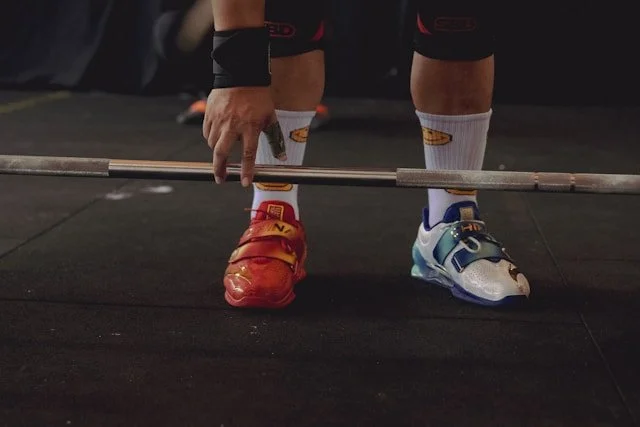
We go to great lengths to avoid these vulnerable emotions because we believe we can’t bear them. But learning to bear them—that’s the real emotional weightlifting. That’s our individual work inside a relationship.
So instead of feeling those raw emotions, we defend. We intellectualize. We diagnose. We blame. We moralize. We demand perfection from others that we haven’t yet cultivated in ourselves.
It’s not conscious, of course. But it’s very, very real.
Let’s Talk About Relational Ambivalence
Real love means holding opposites. “I love you,” and “you hurt me.” “I want more from you,” and “I value who you are.”
This is called relational ambivalence—the ability to hold contradictory truths without splitting the world into good/bad, healed/unhealed, right/wrong or radically interpreting the relationship as over because we feel shame, fear of rejection, grief etc.
It’s the emotional version of trying to have a hard conversation while staying emotionally present and centered—something most of us have struggled with at the end of a long day, when the dishwasher’s full, the toddler’s yelling, and the wifi’s glitchy. And it’s HARD. And most people have zero skills at this one.
Now, let me be clear: some relationships simply must be ended. Some clients I’ve worked with have ended partnerships with profound clarity, sovereignty, and deep self-awareness. There is such a thing as a loving, conscious goodbye.
But that’s not the main challenge I see in my work with people.
The bigger hurdle is our collective discomfort with relational ambivalence. We want certainty. We want to know: is this person “good for me” or not? Are they “healed enough” or not? Should I stay or should I go?
Relational ambivalence is what happens when you choose to stay in relationship even when things aren’t clear-cut. It requires a capacity to sit with discomfort and curiosity at the same time. It’s refusing the easy answers in favor of real contact. And I promise you YOU WILL be relationally ambivalent in a healthy relationship.
This is the soil where intimacy grows. When you let go of needing to win and instead stay with the feeling, you get to actually meet the person in front of you. Not your story about them. Not your assessment. Them.
If Your Therapy Is Making You Feel Superior, It Might Be Bad Therapy
Growth doesn’t mean you get to call your partner a walking trauma wound and expect them to thank you. Growth should make you softer, not sharper. It should invite you to say:
“I get scared when we fight. I wish we had more tools.”
“I notice I want to control how you heal. That’s probably mine to work on.”
“I love you. And I’m struggling. Can we talk?”
That’s differentiated vulnerability. I am me with my vulnerabilities and you are you with yours. That’s adult intimacy. That’s what your therapist was probably actually trying to teach you: to share and hear one another's vulnerabilities.
So before you hand your partner another article or suggest they “get help,” maybe pause. Ask: What am I feeling that I don’t want to feel right now? What would it be like to bring that into the room, instead of the diagnostic manual?
Real relating is a two-way street, not a one-person TED Talk.
What Is Healing in Couples Therapy—If It’s Not About Changing Your Partner?
Let’s be honest. A lot of folks come into couples therapy with a secret (or not-so-secret) hope: that the therapist will finally confirm what they’ve suspected all along—their partner is the one who needs to change (their partner is the f*ck up).
But here’s the real kicker: healing in couples therapy isn’t about changing your partner. It’s about changing the way you relate to yourself and each other.
Healing in couples therapy is about:
Making room for two different realities to exist side by side.
Learning how to name your needs without making the other person wrong.
Letting go of the fantasy that healing means harmony 100% of the time.
Growing your capacity to stay present with difference, pain, and misattunement—and move through it together.
Healing in couples work is actually a kind of emotional renovation. You learn which parts of your internal structure need reinforcing, which reactions are outdated safety mechanisms, and which patterns need honest re-negotiation—not demolition.
And because I think so many of us weren’t taught these skills, I’m working on a set of relating skills workbooks -the basic 101 stuff with no attachment trauma diagnostic stuff—designed to be used side-by-side with your partner or solo—that will be out before the holidays. My hope is that they’ll help couples slow down, explore gently, and relate more skillfully. (Stay tuned!)