
Ending A Friendship: Navigating the Loss and the Social Awkwardness With Kindness

It happens to most of us at some point: a colleague or friend says or does something that cuts deeply. Perhaps you try to address it, but the repair falls flat. Or maybe you realize, with careful consideration, that this relationship is no longer healthy or aligned with who you are. Whatever the reason, you find yourself at a crossroads: How do you move forward gracefully without gossip, blame, or ghosting this person? And how do you handle the awkward moments when this person inevitably pops up in your social or professional circles?
A year or two ago, I found myself in some “new friend” situations that weren’t working for me, and happily, I got pulled out once I got the gist of the pattern I was recreating. Despite the newness of these relationships, my feelings can still sneak up on me. One of them stung today, so I decided to write about it. Funny, another motivation for writing about this is that ending friendships is the number two question old friends from junior high and high school will contact me on Facebook for advice about. (The first is always their marriage.) I’ll say this: it’s hard. Navigating the ending of anything is hard on us humans, and navigating the aftermath of a hurtful dynamic or a misaligned relationship while staying kind and centered requires courage and legitimate practice. But look, this is the stuff that makes you a peace activist. Most people resort to judgment, blame-shifting, mean-spiritedness, or poisonous gossip, which prolongs the hurt of this ending. Through studying and trying stuff, I’ve discovered tools that have helped me heal and engage deeply in this stuff. I hope these insights can be of service to you, too.
Step 1: Self-Compassion First
When we’re hurt, our first instinct is often to ruminate or question ourselves. “Was I too sensitive?” “Did I overreact?” I am the queen of this so I am serious about how I treat myself. Instead, try to anchor yourself in compassion. I make this a deliberate practice for every ouch I experience. Remind yourself:
Your feelings are valid. What happened mattered because it mattered to you.
Boundaries are an act of self-care, not rejection. Walking away from a relationship doesn’t mean you’re unkind or unforgiving—it means you’re prioritizing your well-being.
I am surrounded by people who love and believe in me. Often, we need to imagine caring others saying the above to us as well. This is the art of internal "co-regulation," where we need others to be with us to calm. I usually think of people, plants, and animals all with me.
A helpful exercise is journaling. Write a letter to the person (that you won’t send) expressing everything you need to say. Then destroy it as a symbolic release. Or, write a letter to different parts of you holding a lot of feelings, validating their feelings, letting them know they are not alone, and telling them it is okay to feel bad. This practice can help you honor your emotions without getting stuck in the story.
Step 2: Releasing the Blame Loop
It’s tempting to fixate on who’s at fault: “They’re the problem” or “I should’ve seen the signs.” But blame—whether directed outward or inward—keeps us tethered to the past. Instead, focus on what you can control: how you show up now.

A mantra I’ve found grounding is: “Their behavior is about them; my response is about me.” This helps me stay accountable in my behaviors. Sometimes, though, I need more than a mantra because my nervous system can get speedy and impulsive just hearing this person’s name. It did today. So, I am big into attending to my body. When this person’s name came up unexpectedly, my breath locked, and I could feel a frightful tremble inside my body. I put a hand on my heart and said, "Oh sweetheart, this still hurts." I might even rock side to side or back and forth or hum. The body loves rhythm like this when it is worked up. It is why babies love their parents' shh shh shh sound, rocking, or cooing. And I hate all this crap coming out of Western psychology that we can always do this alone. “Self-soothing” is a psychological skill. But really, we need something called “co-regulation,” which means we get soothed by imagining being held by others or genuinely getting held by others. So call a friend when your solo attempts to soothe yourself haven’t worked. (Excited Side note: I have learned that these endings are the gift that keeps on giving, and staying with the hurt usually reveals what it reminds me of from the past so I get a two for one - healing this friend thing and healing something even bigger from the past if I show up tenderly with myself.)
Adding in one last bit - I know this may sound weird, but the Dalai Lama talks about "compassion far" for those we don’t want to hold close as a balm for the heart. So after I have gathered myself with my sweethearts and movement practice, I might do some compassion practice that wishes them well. "May you be well. May you be at peace." Only when my body has genuinely calmed does it help me recognize that, like me, they, too, suffer. And then the whole thing feels a lot less dramatic and tragic. It is just life, after all. (Thank you, Indigo Girls).
When you encounter this ex-friend person in shared spaces, you might put a hand on your heart or repeat, "Oh, sweetheart," and imagine your caring community holding you as you breathe through the discomfort. These practices prepare you for more close encounters. You can dream up your loving community at any time. My wish is these practices might help you approach the situation with neutrality rather than defensiveness. And my second wish is, with time, you truly heal and can come into contact with these folks in kind, easy ways.
Step 3: Choosing Levels of Engagement
Here’s where the wisdom of Sergio and Enriquez’s eight levels of interaction comes in. My dear friend Lana Jelenjev is one of those friends where we can sit with one another in our experience—not resorting to gossip. She offers true empathy, and her attunement and care bring me back out of the suffering of it and into a more holding stance with myself. She has taught me about these Filipino cultural concepts, which gives me a great guide that doesn’t serve as a rule but gives me a permission slip to discern how to relate to others, depending on the situation. Read Lana’s writing here and learn about her online sanctuary I participate in here.
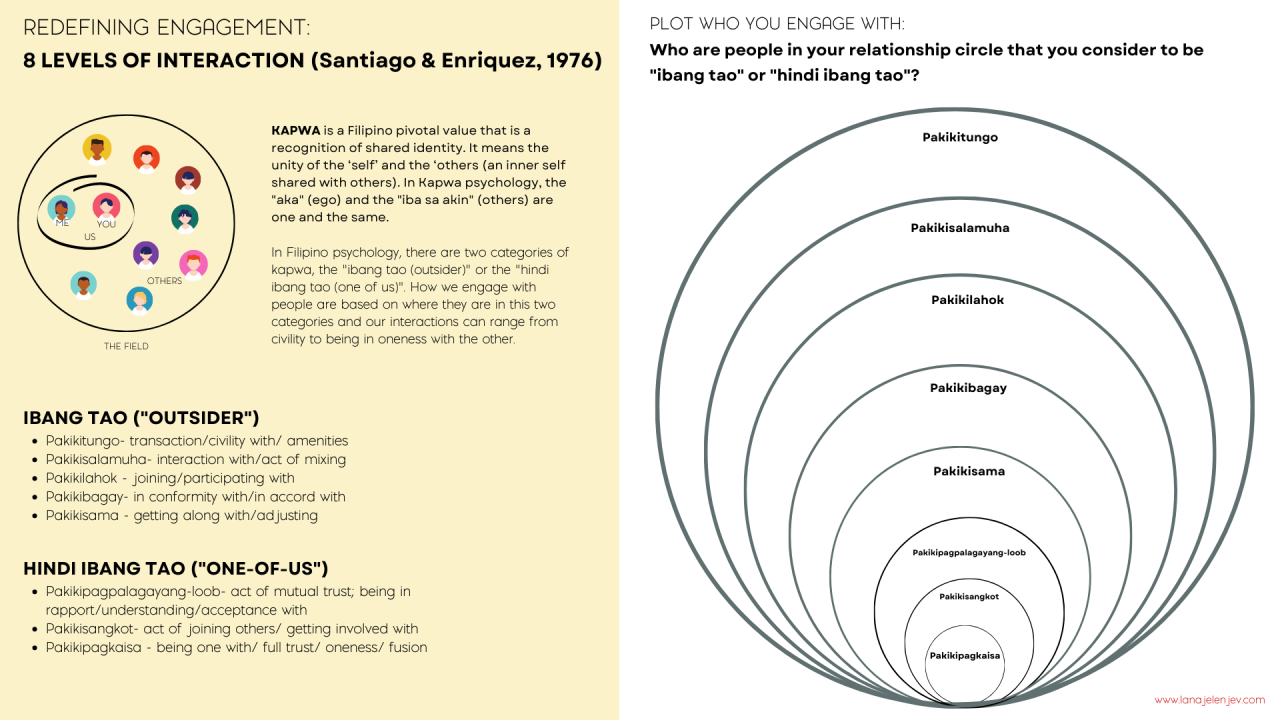
This image is another creation from Lana Jelenjev from her website.
Level 1 is the most distant level, and level 8 is the closest. They really are helpful in navigating tricky dynamics with grace and discernment:
Pakikitungo (Civility): At the most basic level, you can remain polite and transactional. This is ideal for brief, unavoidable interactions where maintaining professionalism matters.
Pakikisalamuha (Interaction): Engage in light, surface-level interaction without deeper involvement. Think small talk at a shared event.
Pakikilahok (Participation): Join in group activities without overextending emotionally. This might mean being present in a meeting or shared project without becoming overly invested.
Pakikibagay (Conformity): Act in a way that aligns with the group dynamic. This level is about finding harmony without compromising your boundaries.
Pakikisama (Getting Along): Work to get along in a way that’s genuine but measured. It’s about mutual respect without deep rapport.
Pakikipagpalagayang-loob (Having Rapport): If there is interpersonal trust, this level involves creating a sense of ease and understanding. It’s unnecessary to force this if it doesn’t feel authentic with people.
Pakikisangkot (Getting Involved): This involves actively supporting shared goals or causes. It’s a choice to collaborate for a bigger purpose.
Pakikiisa (Being One With): The deepest level of connection. If this relationship is no longer healthy for you, you might recognize that this level isn’t attainable—and that’s okay.
When unsure how to engage, reflect on these levels and choose the one that feels right for the context. Doing so allows you to meet the situation with intention rather than reactivity. Why do I love this model so much? I find that as women, we are told we have to hold everyone close. I love that a whole culture and society counters this idea. Thank you, Filipino culture, for offering this. It throws open the doors of possibility and ok-ness to keeping some people kindly at a distance and for some people to keep me kindly at a distance too. How wonderful that we can get along and be one as a people and not have to be BFFs without resorting to mean-spiritedness, harsh cut-offs, or anxiousness.
Step 4: Reclaiming Your Energy
Hurtful relationships can drain us long after they’re over. To reclaim your emotional energy:
Practice somatic release. Notice where you feel tension in your body related to this situation. Move—whether through yoga, stretching, or shaking—to let it go. As you saw above, I love rocking and humming. The rhythmic nature of walking also works. I also love putting my right hand behind my head at the base of my skull and my left on my forehead with care. I lift my right hand a bit to give my brain a little break when overthinking.
Create a symbolic ritual. Light a candle or write a statement of release: “I let go of any power this situation holds over me.” A colleague, Dr. Linda Shanti McCabe, makes something for her folks in recovery called a "God Box." This is a box or jar you decorate with things and then put inside of it things you have very little control over. By doing this, you are choosing to hand over this challenge to something bigger than you: love, nature, god, or the universe.
Step 5: Lean Into Your Values
Who do you want to be in this situation? Kind, centered, firm? Let these values guide your interactions with the person and your community. It helps to imagine a time when you were kind, centered, or firm. See yourself there; become that self now, and feel your whole body in that kind, centered, firm place. When mutual friends bring this ex-friend up, remember the feeling of this state in your body and redirect the conversation or respond neutrally, like: “We’re not close, but I’m glad you’ve connected.”
Step 6: Nurture Joyful Connections
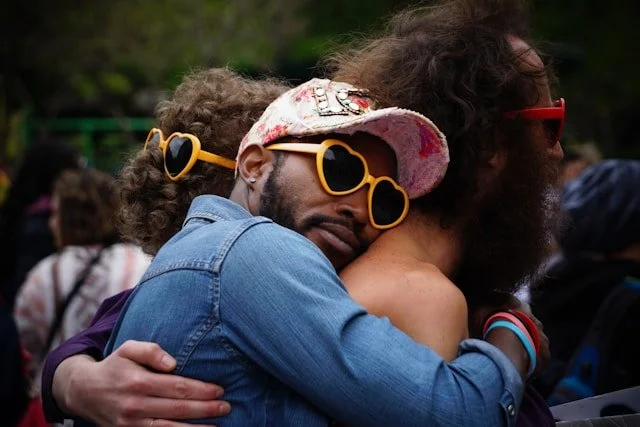
Refocus your attention by strengthening relationships with people who energize and inspire you. What is it about these people that feels good to you? Seek out spaces where you feel seen and supported. By leaning into these connections, the sting of one hurtful dynamic will feel less consuming.
Step 7: Accept What You Cannot Change
You may not be able to avoid this person entirely. They may continue to circulate in your professional or social circles. And you may still feel pain. Pain is part of being alive. Pain is not evidence you did the wrong thing, or they are some evil human. Pain is evidence that something in you needs to be attended to. But you can decide if this momentary sting becomes a bigger ball of suffering depending on how you attend to the pain. Ruminating in your mind, letting your body stay pent up and tense, or gossiping are all surefire ways to keep suffering going. It may be the pain and sting come up 100 times and we have to embrace that as ok. I mean, seriously, just the usual grief of endings is hard, but add to it that you got hurt and are choosing to let someone go. I encourage you to use these practices as often as needed. We become centered, kind, and wonderfully flawed humans by attending to our hurts. Acceptance doesn’t mean condoning; it means making peace with what is. Making peace means treating yourself intentionally every time you feel a sting or an ouch like this until it gradually goes away—and usually, it does.
A Final Thought
Walking away from a friendship or professional connection is rarely easy, especially when it’s tied to hurt or disappointment. But by practicing embodied compassion, choosing thoughtful engagement, and anchoring yourself in your values, you can move forward with grace. You can hold your boundaries without closing your heart or making the other person wrong. And with time, you might even heal other hurts from your past that this person was linked to. A two-for-one heal deal. Living like this, you’ll reclaim your power and peace and make the world more peaceful. Thank you for reading this and for taking care of your heart.