
We Forgot We Were Human: Why Self-Optimization Is Making Us Less Alive
“We don’t become more human by optimizing ourselves. We become more human by reclaiming the capacities that make uncertainty bearable.”
I drove the fiver hour drive home from Paris yesterday (well, my husband drove), reading three different Substacks and articles by colleagues on perhaps disconnected topics that all stirred a deeper, unifying thought. I went to bed wistful and woke up this morning writing this blog post from a spontaneous, heartfelt place. I hope you enjoy.
Three Articles I Couldn't Stop Thinking About
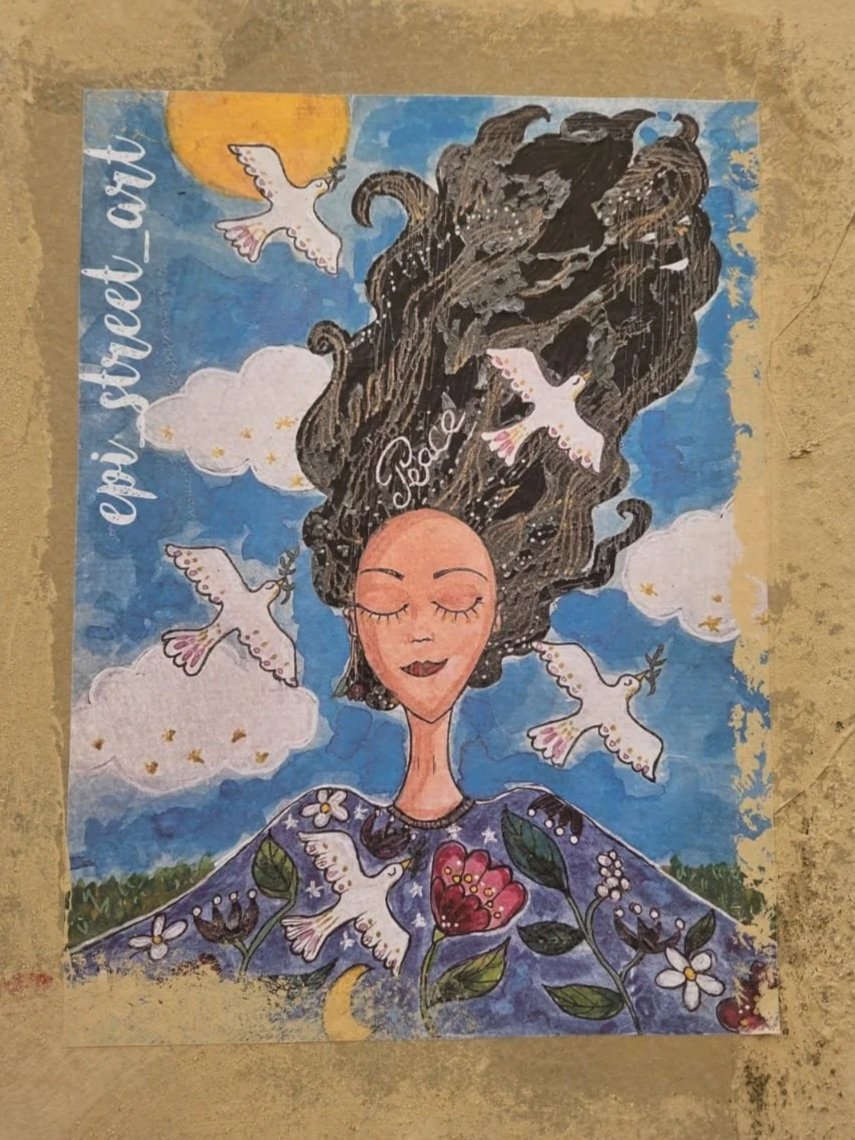
The first article was by a therapist from a friend’s psychotherapy clinic in India. She was writing about our mind’s need to be right and have certainty. I take up this topic a lot but Aastha Lalan’s argument was deceptively simple: to be in a real relationship, you have to be willing to loosen your grip on your own mind. Because a relationship means you are actually contending with another human being, another consciousness, someone whose inner life is radically different from yours. And that loosening? Psychologically, it can feel like annihilation. Analysts talk about annihilation anxiety. I have often thought that becoming a robust human is learning to hold lightly to your thinking, to wonder about it, and update it when you get new info or hold that you simply can’t fully know. But for many, there is a pretty massive terror that lives in them that if I don't know what I think, I will literally cease to exist. So we hold our certainty like a life raft, even when it's the thing keeping us from life.
The second article was a LinkedIn post from a therapist I don't know well, writing about therapists and branding. I couldn't get past the paywall to read the full piece, but his framing stuck with me: that professional branding, the way therapists are encouraged to package themselves now, is a kind of false or reductive mask. We perform rather than relate.
The third was my friend Dr. Renée Lertzman, writing about climate activism. She made an observation that turned up the volume on something I already sort of knew but hadn't heard said this way. She said that scaring and scolding people doesn't motivate them to act on climate change. And then she said this beautiful thing that made a smile come across my face, and my heart get warm: humans are inherently caring. In fact, humans are so caring that we almost can't bear it. The enormity of what we feel for the world becomes too much, so we anesthetize. We distract. We avoid. Not because we don't care, but because we care so much it's easier to look away. Her argument was that if you can reconnect people to that care that is so profound inside them, and help them see it as something beautiful rather than something overwhelming, they will take action. I just loved this so much.
I am working on a book where I reflect on the work I did at Sidewalk Talk and start preparing to wind down that project and what it has left me with. These three articles sparked some new thinking for me. I keep coming back to this question over and over again. How do we relate to ourselves? Do we even know how?
Why Positive Thinking Can Actually Make Things Worse
Not the manufactured version of relating to ourselves, either. Not the high-vibration, affirmation-loop, I-love-myself-and-I'm-manifesting-abundance stuff. As an aside, there is real research suggesting that for people who are already struggling, relentless positivity makes things worse, not better. A frequently cited 2009 study found that repeating affirmations like "I am a lovable person" actually lowered mood in people with low self-esteem. The gap between the affirmation and what they actually believed about themselves is what appears to make everything worse. The people who received the affirmations were the ones who already felt pretty good about themselves. Which could tell you something about who the wellness industrial complex is selling to.
I'm talking about something older and perhaps a little deeper than affirmations. A steadfast, earnest, from-the-beginning relationship with who you actually are.
I keep thinking about the German parenting philosophy captured in the book Achtung Baby. There is something baked into how children are raised here in Germany where I now live that says: you are capable. It's not cold. It's not abandoning. It's a kind of respect. Compare that to helicopter parenting, which I think is, in its own way, a well-intentioned overcorrection to a perceived deficit of care. But what it often transmits to the child is something more complicated: I will do all the caring for you, and the result is that the child may be slower to develop a relationship with themself. Which is its own kind of message about whether a person can be trusted with themselves, right?
What we actually know about secure attachment is worth pausing on here. Securely attached children don't become secure because someone hovered and preemptively soothed every discomfort. They become secure because a caregiver signaled, reliably and without surveillance: I am here. I see you. You are not alone. That signaled reliability let that child explore and develop independence. It creates trust in oneself because one knows that support is also available when needed.
Which brings me back to us. Adults. Relating to ourselves.
I said something on the TEDx stage a few years ago that I felt I didn't speak to as deeply as I really wanted to. I've been trying to say it differently ever since. We have learned to relate to ourselves as machines that need to be fixed. Or, in the more aspirational register, as brands to be optimized. Or as lone warriors, saviors, or heroes, soldiering through, trying to fix the world singlehandedly with with enough hustle and burn. I have been confronting some of the lone-warrior version of this in myself and in the projects I have taken up to fix the world, rather than relating to myself. Not saying contributing to a cause isn’t a great thing to do, but I have seen it too many times, the service is a doing and fixing, at the expense of self relating.
Something about the bigger magic of what it means to be human got really lost along the way. I can’t know for sure how we get it back, but art, nature, and eroticism are the sure-fire ways I find it in my life. The word I want is sentient. Have we forgotten how to feel our sentience?
And psychology, the field I work in and love, has not entirely helped. Traditional clinical psychology starts from the premise that something is broken and needs repair. Positive psychology starts from the premise that something is functional but could be better. Both are, in their own ways, still treating the person as a project. Somatic psychology gets closer to the aliveness I am after. Jungian work gets even closer. Art therapies are closer still. But even there, we haven't quite arrived at a consistent, culturally accepted practice that says: you are a living creature, with an interior, and the task isn't to fix or optimize that interior but to actually inhabit it. Maybe meditation? My belief about coming to therapy is that working on trauma and behavior problems is not to fix yourself but to inhabit yourself more fully.
What I See in High-Conflict Couples Therapy
Now enter my couples.
I work with people in high-conflict relationships (I wrote about apologizing after one of these conflicts here if you want more), and one of the things I notice most is how certain everyone is. Back to Aasthla’s article I mentioned before. Couples come in totally certain about how their partner should behave. Certain about what a good man looks like in this new feminist era. Certain about how money should be handled in a dual-income household, how fights should go, how love should be demonstrated, what their values should be, and how the kids should be raised. There is an enormous amount of should in the therapy room before anyone even opens their mouth.
And I understand where it comes from. We have more access to information than any generation in history. There are podcasts, articles, attachment-theory explainers, nervous-system graphics, Reddit threads, and therapy-speak memes for every conceivable relational scenario. People arrive having already diagnosed their partner, their dynamic, and often their therapist. They've done their research. They know what's right. They even know what I “should” be doing as a couples therapist and tell me. (Here is a piece on how therapy speak can impact relationships.)
The problem is that certainty is the enemy of an actual relationship. To truly be with another person, you have to be willing and able to not know. You have to be able to hold your map loosely enough to let their reality in. Many folks I see do not have the capacity to not know. Heck, I am working on it too.
“The question isn’t whether AI is good or bad. The question is whether we are going to use it to deepen our self-knowledge or to fortify our self-image. ”
And this “not knowing” skill is about to get harder. When you can open an app like an AI chat and have your certainties reflected back at you, gently and at length, the gravitational pull toward being right gets even stronger. I say this without wanting to blame technology, because that's too easy and too boring. But I do think we are moving into an era where the human tendency to seek confirmation will be turbocharged in ways we don't yet fully understand. The question isn't whether AI is good or bad. The question is whether we are going to use it to deepen our self-knowledge or to fortify our self-image. Those are very different projects, and they lead to very different lives.
Optimize. Accumulate. Smile. Repeat.
Think about the instructions we have been given, so consistently and from so many directions that most of us stopped noticing them. Be efficient. Accumulate. Optimize. Grow. Scale. Fix what is broken and upgrade what is not. Dominate your calendar, your inbox, your goals, your body. Measure your progress. Track your metrics. Build your brand. (Pause here. What did you feel in your body when you just read that? Typing it I got hot and angry and then sad.)
Perform your gender correctly. Women, be warm and accommodating, but not too much. Smile. Make people comfortable. Want things, but not too loudly. And make sure your body fits the template while you're at it. Not too big, not too soft, no muffin top, no visible evidence that you are a human animal who eats food and ages and exists in three dimensions. Men, achieve. Provide. Do not need. Keep it together. Be the rock. And if the rock has feelings, find somewhere private to put them. Always get erect and stay hard. Also, be jacked but make it look effortless.
Therapy will tell you to set better boundaries. Coaching will tell you to identify your limiting beliefs. Productivity culture will tell you to batch your deep work. Even our relationship advice comes in frameworks now, with acronyms, attachment styles, and love languages, as if the person sitting across from you at dinner is a computer program to master rather than a mystery to be met.
Underneath it all runs the same assumption: that you are a machine and that machine can be improved. That you are separate from nature rather than made of it. That you are independent rather than interdependent. That resources are endless, and growth is always the goal. That your body is a vehicle for your productivity rather than the very place where your life is actually happening. That you are above the rhythms of season and darkness and rest, rather than a part of them like every other living thing. We are nature.
The idea that humans are just optimizable machines is not a fringe idea. This idea is the water we swim in. And it can be very hard to question, because questioning can feel like a whiny cop-out for not having a better “growth mindset”. Like maybe you just aren't trying hard enough to optimize and become the best version of you possible.
Audre Lorde Wasn't Writing About Sex
Audre Lorde saw this self as project a long time ago, I think.
In her 1978 essay Uses of the Erotic, she argued that deep feeling is not a distraction from knowledge. It is knowledge. You can hear her read the essay here. Something powerful, for me, about hearing her voice.
Deep feeling IS knowledge. Say that a few times slowly.
She was writing about what happens when the structures we build, the institutions, the economies, the cultural scripts we hand people, ask them to live from the outside in rather than from the body outward. To follow the rules of the system rather than the wisdom that lives inside of each of us.
She was a poet and essayist and she was doing something more radical than activism. She was trying to remind us that we are creatures who feel, and that feeling is where we actually live. The danger she named was not any one ideology or technology. It was the tendency of the systems we build to replace inner knowing or our erotic lives with outer instruction. I love her definition of erotic “I speak of the erotic as the deepest life force, a force which moves us toward living in a fundamental way.”
“Deep feeling is knowledge. Say that a few times slowly.”
We are building some very sophisticated outer instructions right now, have been for a while, now supercharged by AI. The question Lorde would ask is the same one I keep asking in the couples room: at what cost?
To the Young People Who Think Joy Is Complicity
There may be some pushback on what I am saying. Too privileged. Too hedonistic. There are a lot of folks who are looking at this invitation to inhabit your own sentience, feel the birdsong, and notice the hedgehog, and are thinking, "Are you serious right now?" While wars rage? While the planet heats? While the systems you're describing grind people into nothing, you want me to feel my feelings and grow downward into myself?
I hear that. I hold it. Many young people have absorbed a framework that goes something like this: comfort is theft. Joy is complicity. To feel good while others suffer is a moral failure. I understand where that comes from. The suffering is real and the inequalities are real and the urgency is real. But I want to gently name that this “joy is complicity” framework cuts you off from the erotic, too. The erotic is about your capacity to feel fully, which includes the grief and the rage and the unbearable wrongness of injustice, but also, necessarily, the glee and awe and delight of living.
Drowning in despair and pain is not evidence of having a moral conscience. That's the same humans-as-machines logic, but instead of optimizing for productivity, you are optimizing for moral purity.
What Audre Lorde inspires in us is that you can feel everything, the bliss and agony, and still stay in a feeling erotic state with life rather than “machine-ifying” life. Feeling might actually be the more radical act.
What a Hedgehog Taught Me About Being Alive
Because I wake up most days thinking “I am going to make lasting memories today.” On my best days, and I mean this, I am floored by what it is to be alive in a body.
The wind on your cheek. Birdsong that arrives in the morning like a love poem being sung to you out your window by the universe. Feet crunching on dried leaves. That hedgehog who pokes his head out of nowhere and looks at you like you're the strange one. The wasp gang that has very strong feelings about your jam.
“Drowning in despair and pain is not evidence of having a moral conscience. That’s the same humans-as-machines logic, but instead of optimizing for productivity, you are optimizing for moral purity.”
Death and pain and the shortness of this life of ours, even those feel like part of the deal I have accepted with fervor. Our humanity is not a problem to solve. I am on the hunt for evidence of aliveness. The way relationships hurt and dazzle and disappoint and crack you open and make you laugh at 2 am. The fact that we are animals. That we are made of the same stuff as the trees we walk under. That none of this was guaranteed, and all of it is temporary, and somehow that makes the hedgehog matter more, not less. Lorde would remind us that the glee and the grief are the same force. The capacity that lets you squeal at a hedgehog is the same capacity that lets you feel the weight of the world. You cannot have one without the other. Numbing the pain numbs everything.
I'll be transparent: I've done psychedelic work in therapeutic settings a handful of times, and it has deepened my relationship to this erotic way of living more than almost anything else I've tried. I hold enormous hope for psychedelic-assisted therapy, not as another optimization tool (please no), not as a way to become a better-performing version of yourself, but as one of the few things I've encountered that actually delivers you back to your own sentience. Back into your body. Back into the mystery of being a creature who feels things all the time.
James Hillman and the Case for Growing Down
James Hillman wrote about this in a different way. In The Soul's Code, he proposed what he called the acorn theory: that each of us comes into the world with a calling already inside us, the way an oak tree is already inside an acorn. And he argued against our cultural obsession with growing up, with accumulating, achieving, and climbing, in favor of what he called growing down. Not ascending. Rooting. Becoming more deeply embedded in the actual texture of your life, your relationships, your body, your place in the world.
That image keeps surfacing for me everywhere I turn. Because so much of what passes for self-development right now is growing up in exactly the way Hillman was critiquing. More degrees, credentials, job titles, and zeroes behind your bank balance. Better branding. Optimized habits. A perfectly curated story of who you are. Your hero story arc. None of that is growing down. None of that is about rooting.
That's what Renee was pointing to with climate, what Aasthla was pointing to with certainty, and what the branding piece was circling back to. We have outsourced our relationship with ourselves. We turned the mystery of being human into a problem to be solved. And in doing that, we lost the mystery and the erotic. And because we don't quite know how to be with our sentient selves, we don't quite know how to be with each other.
What Happens When Therapy Leads With Sickness
I want to tell you about a moment from early in my training back in early 2010. I was in a psychoanalytic consultation group. We had printed transcripts of our sessions, word for word, and we were coding them, analyzing every phrase the client used, looking for the moment transference appeared, tracking pathology in the subtext of the stories they shared about their dog. And the clinician supervising us turned to me and said: Traci, you have a tendency to assume people are healthier than they are. People come to you because they are sick.
I remember sitting with that. And I remember thinking, quietly, that this was not a world I wanted to live in (nor the consult group I wanted to remain in). Not because the diagnostic lens is wrong. Sometimes scouring cases like that can be important. I have sat with clients whose clinical presentations were serious and real and whose capacity for relationships was genuinely limited by things that have names in the DSM. That deserves to be taken seriously. But ooph, I wasn’t sure I wanted to be a therapist if seeing every human as sick was a requirement.
To make that my primary lens. To lead with sickness. I could not do it. No thank you.
I think about something I learned early in my wonderfully more integral psych graduate school, that certain experiences Western psychiatry would hospitalize, other cultures have long understood as calling, as vision, as a different kind of knowing. I am not romanticizing psychosis. I have sat with people going through it and watched it torment them. But I have also spent years listening on sidewalks, and some of the most profound things I have ever heard came from people whose minds worked in ways that made colleagues I know deeply uncomfortable. To stay open to that, to not need to hold so tightly to your own mind that you cannot briefly enter the strange and luminous territory of someone else's, requires that you have kept some sentience alive in yourself. Some willingness to be moved. (I wrote about losing your mind and the goodness of being a little mad here.)
How I Do Therapy Differently Now
This is the tension I carry into my practice every day now. We are being shaped by and living in systems that are not going away. Capitalism and its imperfections and harms won’t end just by changing to a new system. The DSM has its uses but also real limits. I am not suggesting we burn it all down and go live in the woods, though some days it sounds mighty attractive.
What I am suggesting is that we cannot let our imperfect world and the systems we have cobbled together become the whole story of what it means to be human. We are bigger than our diagnoses. Bigger than our attachment styles and our limiting beliefs and our personal brands. Bigger than our productivity scores and our relationship frameworks and our five-year plans. And our humanity is bigger than this crazy fucked up world right now. Transpersonal psychology has always known this. Art therapy has always known this. Indigenous traditions have always known this. The body has always known this.
I am twenty-three years into practicing as a therapist, and I am in a strange season of my own work. I am taking courses I normally wouldn’t, sitting in trainings, reading things that don't obviously connect, trying to listen my way toward something I am seeking but don’t have the words for. I have my own analyst. I do psychedelic work in therapeutic settings when I can. And still, I am less certain than I have ever been, which I think means I am finally getting somewhere. Hah! I am in the throes of closing down a non-profit I started 11 years ago because five years ago I was on to the fact I was trying to be a hero while harming my own erotic life. Not anymore. I choose me. Not hedonistic avoidance. No, I am choosing to live a life that allows me to deeply relate to me.
One of the things I have been studying is a method called STAIR, developed by Juliane Taylor Shore. I want to be precise with the word “method” because she is. It is not a model. It does not sit on top of your existing theory like a new coat of paint. It integrates with whatever clinical framework you already work from, and it asks something deceptively simple of the therapist. Begin by asking the client what they are hoping for. Not what they want to fix.
And then, as a therapist, you pay attention. You pay attention to the moment you start trying to optimize the client. You notice the pull toward fixing, toward efficiency, toward moving them along a prescribed arc of healing. You notice when you do it to yourself. And you stay with the hope they brought. You help them find, inside their own body, where they have gone numb to it or have stories that block them. And what they are waking back up to is not always beautiful. Sometimes it is grief that has been waiting a long time. Sometimes it is rage, or longing, or a sorrow with no clean name. That is not a side effect of the work. That is the work. You cannot return to your full sentience and skip the hard parts. The hard parts are part of being alive.
“ Of noticing where the body learned to act like a machine, where the spirit learned to perform for safety and belonging rather than feel, and we join with clients to slowly, carefully unlearn that. Coming back into intimacy with yourself. Not as a project. Not as an optimization. As a homecoming.”
You could call it a trauma method, and it does profound work with trauma. But I am coming to understand it as something so much larger than that. It is a method of helping people reclaim their own sentience. Of noticing where the body learned to act like a machine, where the spirit learned to perform for safety and belonging rather than feel, and we join with clients to slowly, carefully unlearn that. Coming back into intimacy with yourself. Not as a project. Not as an optimization. As a homecoming.
What excites me, more than anything I have encountered in a long time, is the possibility of what happens when you weave this kind of work together with other threads. The signals and signs of Process Oriented Psychology. The cyclical patterns that psychodynamic thinking tracks so well, our stubborn human tendency to recreate what hurt us, looking for a different ending. The ancestral and somatic dimensions that so many indigenous and depth traditions have held for centuries, while Western psychology was busy diagnosing. (I wrote about experiential psychotherapy here and what this might look like here.)
I do not have a unified theory. I am not sure I want one. What I have is a growing conviction that the thing we most need, individually and collectively, is not a better system. It is a way back to ourselves.
I am trying to live my life from that knowledge. I do not get it right a lot of days. The systems are loud and I am human and sometimes I spend three hours optimizing something that did not need to be optimized. At least I am aware of it now.
Celebration time! Here is what I do get right. Every morning, fresh out of bed, crusty-eyed, messy-haired, I go upstairs, throw open the window, and lean my head out for a good long while, and I listen to the birds. I feel so much glee that I squeal. Actually squeal. The delight I feel in these birds’ singing almost hurts. Sometimes there is grief too, for all the time I have spent missing this. But mostly I am a happy animal who forgot, for one moment, that she was supposed to be a brand.
That is what I am trying to protect. In myself. In my clients. In the couples who come to me certain they have each other figured out.
Just that. The squeal.