
How to Apologize to Your Partner and Actually Repair the Relationship
The real injury isn't the mistake you made. It's the emotional disconnection your partner now feels. The work isn't just saying "I'm sorry." It's helping your partner feel emotionally connected again. Read on…

I have wanted to scream this from the rooftops for a long time. Communication skills might seem like the first place to start when conflicts arise, but they’re often not the most effective initial focus. Moreover, communication skills will not stick easily if you do not learn what is happening in your body and brain when you fight. That is why I feel sheepish couples have paid an enormous amount to learn communication skills in couples therapy and then resort to the same old ways of fighting outside of session. I want better for us all and I am doing more training to get better at this too. People get too damn focused on the skills, I think, to avoid messy feelings - "teach me skills, so I don't have to feel and meet vulnerable parts of me." It is like folks want to learn to be "less human" through "tools and techniques" rather than more human by feeling the wildness of our soft animal bodies. Here’s the deal: before you can effectively use communication skills, you must learn how to feel your emotions, regulate them, and help your partner do the same. Only then can communication truly work. And if you don’t learn this, you will find yourself in a blame game which I wrote about here.
What most couples—and families, for that matter—often get wrong about conflict in relationships is thinking conflict is primarily about misdeeds. The assumption is, “You did wrong, or you’re a bad partner making lots of mistakes and screwing things up, and you need to fix those mistakes so I don't feel bad.” But more often than not, conflict is a rupture of closeness, and it’s about emotional signals missed, not mistakes made or misdeeds.
Misattunement is the clinical name of these missed signals. When an instrument is mistuned it sounds horrible. It is a little bit like that here too. When partners miss our signals, it creates a whole bunch of bodily reactions that you might not even be aware of, and then your brain will make up all kinds of negative stories right after. Pop psychology often calls mistattuned partners avoidant or emotionally unavailable partners which I go into detail about here if you are interested.
Misattunement can stir up some pretty big feelings - painful ones. Yet, instead of addressing the feelings, we often find ourselves stuck in a game of emotional “whack-a-mole,” policing what’s deemed “good” or “bad” behavior by our partner.
What I hope you take away from my writing here is that conflict or ruptures to connection are moments when emotional closeness is interrupted. These aren’t courtroom battles to litigate your partner’s misdeeds, but invitations to understand where and why you’ve drifted apart.
Most conflicts are organic moments of drifting away from each other through misattunement, and conflict done well helps you find your way back to each other. Yes, I am intentionally rebranding conflict in your mind. Conflict wants a repair of the misattunement. Rupture and repair want you to retune your relationship instrument together. And what is more, this drift apart and together happens in weird moments around not doing the dishes when asked, a shitty tone of voice, a bounced check, not protecting your partner from your mother-in-law’s bad mood, and the list goes on. These moments seem so silly that many couples blow past them, but if they create a ton of feeling, you must repair it. Have enough of these ouches blown past, and you will come to my office steaming mad or cooly hopeless about your relationship. For couples that have the same fights over and over again, I created some great interactive tools using Schema Therapy to go deeper and figure out why.
Apologizing isn’t just about righting wrongs—it’s about reconnecting every time you have misattuned and the tide of attunement is on the ebb tide, away from the shore of connection. Reparing is about coming back to shore together. Our relationship is like the tides - far and close and far and close and far and close. Misattunement is inevitable the question isn’t if it will happen but when. The good news? Misattunement doesn’t signal doom at all—it’s an invitation to master the art of soothing yourself and following the ebb tide back into shore. Conflict or rupture between you two is an invitation to learn the art of repair and how to apologize for the sake of reconnecting again and again and again and again and again and again and again and again and again and again and again and again and again and again and again forever.
What Is Attunement (and Why Does It Matter)?
Attunement is the ability to sense and respond to your partner’s emotional state.
It’s like being on the same emotional radio frequency. In healthy relationships, partners are only attuned about 30% of the time. Do I need to say that louder for those of you in the cheap seats? That’s right—70% of the time, you’re misattuning. Let that sink in. You’re going to miss the mark a lot. Your partner is going to fail you a lot.
The key isn’t in being perfect; it’s in knowing this is normal so you don't regress to your wounded child self (which we often do) and then repairing with ease and grace when the emotional connection/attunement tide has gone out.
Misattunement can feel hurtful, though, especially when one partner doesn’t realize they’ve misattuned. For example, one partner might think, “Why are you upset? I didn’t do anything wrong!” Meanwhile, inside, they are secretly spiraling into a shame storm of real terror because they can see the look on your face that they have let you down in some way but haven't a clue what they did. This is where defensiveness often sneaks in, turning a simple moment of misattunement into a full-blown argument. The partner that felt mistattuned speaks up and the partner that did the misattuning feels threatened and reacts.
Here’s a story that might feel familiar:
Sam and Jamie’s Evening Misfire Sam comes home after a long day and sits on the couch, scrolling through their phone. Jamie, eager to share something exciting, starts talking about their day. Sam nods absentmindedly but doesn’t look up. Jamie’s excitement fades, replaced by frustration. “You’re not even listening!” they snap. Sam, caught off guard, retorts defensively, “What? I’m listening! You’re overreacting.”
What’s happening here? Jamie feels the sting of misattunement and interprets it as a lack of care. Jamie expresses their sting with loud, accusatory, and mean words. Unaware of their misstep, Sam is shocked at Jamie's sudden outburst and reacts defensively. Now the misattunement gap is wider at exactly the moment Jamie was signaling, “Holy crap, where are you? I am hurt. You are too far away." Of course, that isn't how Jamie said it, but that is the tender desperation that can get evoked in these moments under the accusation words said. This is why understanding the brain is so important. This stuff happens so fast that if you don't understand the mechanics of what is happening, you will feel hopeless.
Why Misattunement Feels Like a Big Deal (Hint: It’s Your Brain)
When your partner misattunes, your brainstem and midbrain can jump into action before you even know what’s happening. Therapy must teach you to manage this part before anything else.
Here’s why:
Brainstem (Your Survival Brain): Processes sensory input in milliseconds. It’s responsible for triggering fight-or-flight responses. Misattunement can feel like a threat to your connection, setting off an alarm bell. This might manifest physically as a racing heart, shallow breathing, or tense muscles. For example, Jamie’s brainstem might have triggered a cascade of physical sensations like a clenched stomach or tightened jaw, signaling danger even though Sam wasn’t intending harm.
Midbrain (Your Emotional Brain): Interprets the emotional meaning of the moment in seconds. It’s where hurt feelings and emotional memories live. In Jamie’s case, their midbrain quickly concluded that Sam doesn’t care about me. The midbrain’s job is to assign meaning—often incomplete or skewed—to what’s happening, and blame frequently surfaces from this part of the brain. This is why Jamie’s frustration turned into an accusatory statement like, “You’re not even listening!” Some couples I work with have long stories about why their partner does what they do but it comes from this midbrain and the kitchen sink of all relationships past wrongs get lumped in together.
Prefrontal Cortex (Your Rational Brain): Processes information more slowly, taking several seconds to assess and respond. This part of the brain can calm things down, reason, and make sense of what happened. It’s also the part most needed for repair.
Isn't it nuts when you realize that the brain is doing this under every one of your fights? I am not immune. I can be one big stinker with my own partner. Do you get that if I give you a bunch of communication skills but you are in brainstem/midbrain stuff you aren't going to use any of the skills because you quite literally can't? Understanding these processing speeds really helps to normalize why you and your partner react so quickly and intensely and can even get downright mean, at times. It doesn't mean either of you get a permission slip to act this way but it helps you get some things straight. Your body and brain are primed for survival. Connection can't happen if someone's system is in survival mode, which means it takes deliberate effort to shift from survival to connection and communication skills won't help you.
Some psychological names given for this connection mode include; the nervous system's "window of tolerance", that your "prefrontal cortex is online" or you are in your "window of care". I have my own Traci Ruble style. I call it, you riding on your Unicorn Floaty and I got the idea from a graphic that a website called Mind Peelings did some years ago. It is such a visceral image. If your body doesn't feel like it is on a Unicorn Floaty floating down a river and stays at a 3 or lower on the stress scale of 1 to 10 you cannot talk about jack shit. You can't. You are off the unicorn floaty drowning in the water. Not usually a good time to have a constructive conversation. You catch my drift?
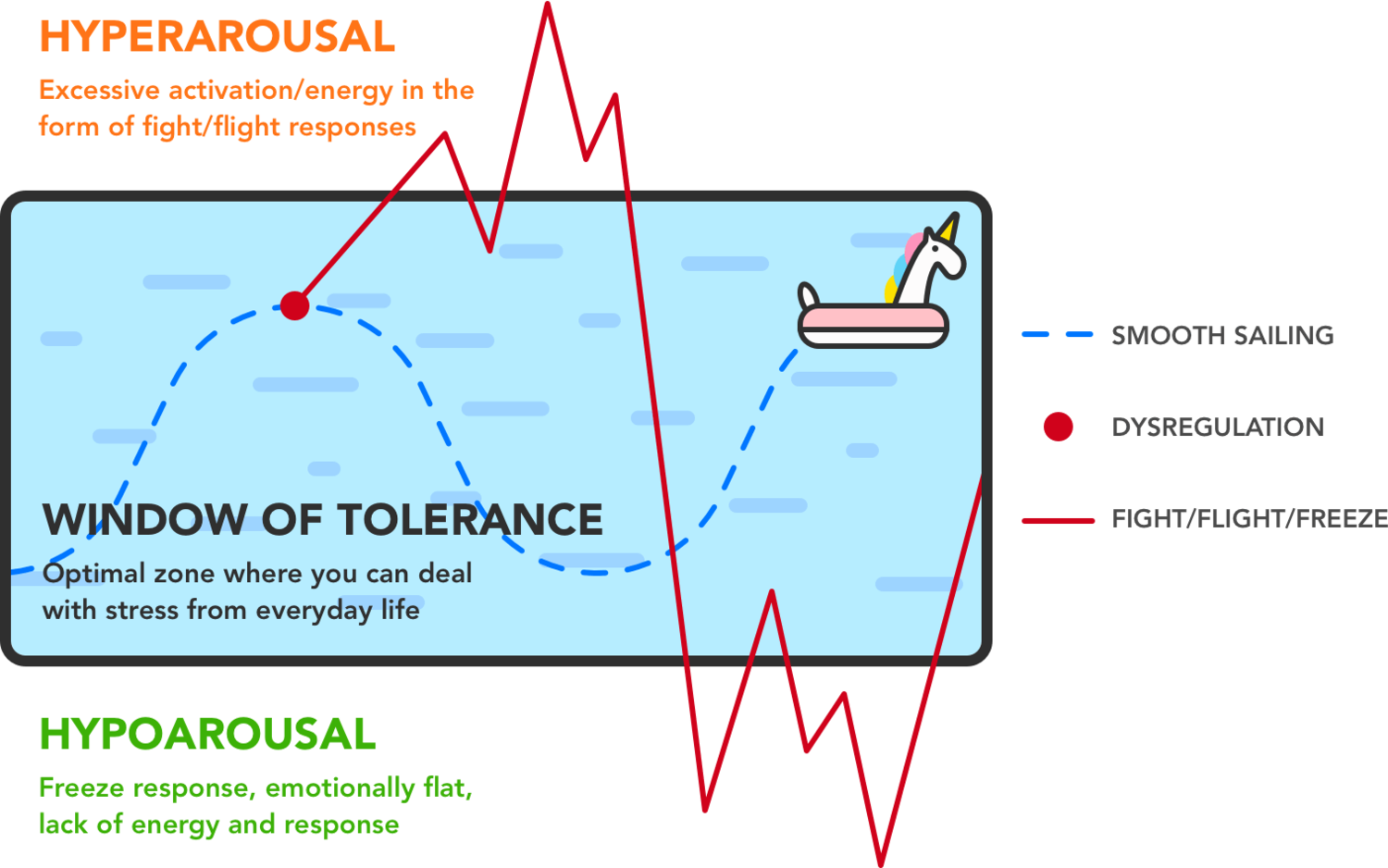
Visit MindPeelings.com for other great graphs and content like this.
This is also why, in couples therapy, therapists often interrupt or slow down the conversation—to help you shift out of brainstem and midbrain reactivity into prefrontal cortex reflection. Without this slowing down, therapy can feel like just another arena to rehash old fights, stuck in the same unproductive loops.
Moreover, the goal in therapy (and in your relationship) isn’t to catalog who is right or wrong. Many couples secretly hope therapy will function like a referee declaring a winner. But here’s the truth: some aspects of your partner’s personality simply won’t change. This aligns with Gottman’s finding that 67% of couples’ conflicts are perpetual and fundamentally unsolvable. Why? Because you’re different people with different moods, styles, and traits. The issue isn’t about becoming more alike. Instead, it’s about learning to notice and repair those inevitable moments when your differences lead to misattunement. There are some other foundational things that help that include having shared values that bind you across your individual difference. Mine and my partner's values are kindness, adventure, community, connection, presence, and play. So even where we are different, we compromise to stay aligned with our shared values and that helps us bridge our differences.
Attachment Styles and How They Impact Misattunement
Attachment theory helps us understand why different people respond to misattunement in unique ways. It explains how early experiences with caregivers shape the way we form emotional bonds and handle disconnection. At its core, attachment theory provides a framework for understanding patterns of secure and insecure connections, offering insights into why our bodies and brains may react differently to moments of emotional distance with our partner. Our attachment style—secure, anxious, avoidant, or disorganized—shapes how our brain perceives and reacts to these moments of disconnection. Where Do Attachment Styles Come From? Attachment styles develop early in life, based on how caregivers respond to a child’s needs. Some even suggest that we may have attachment injuries that live in us from previous generations. Wild right? Consistent, loving care fosters secure attachment, while inconsistent or neglectful care can lead to insecure attachment styles. Remember, a baby not receiving secure care isn’t always due to having a "bad parent." It can stem from circumstances such as having many siblings, parents working long hours, postpartum depression, or a parent grieving a loss during your early years.
Attachment Styles at a Glance:
Secure Attachment (50% of the population): Securely attached individuals generally trust that others will be there for them. When misattunement happens, they are more likely to seek repair calmly, without catastrophic thinking.
Anxious Attachment (20% of the population): Those with an anxious attachment style are hyperaware of misattunements and may perceive them as threats of abandonment. Their brainstem might go into overdrive, triggering fight-or-flight responses that manifest as clinginess, accusations, or heightened emotional reactions.
Avoidant Attachment (25% of the population): Avoidantly attached individuals tend to downplay or dismiss misattunements. Their midbrain might suppress emotional significance, leading them to withdraw or deflect, making repair challenging.
Disorganized Attachment (5% of the population): This style is often rooted in trauma, resulting in unpredictable responses to misattunement. The brain may vacillate between hyperactivation (anxious/aggressive responses) and shutdown (avoidant behaviors).
The Ingredients of a Good Apology
So how do you repair misattunement and bring yourselves back into connection? Here are the steps:
1. Get Calm and Centered

I do sometimes crack out my unicorn ears to playfully remind you to get on your floaty in sessions.
Before apologizing, check in with yourself. Are you in your prefrontal cortex or in my language are you floating down a gentle river and your body feels like it is on a unicorn floaty? You’ll know because you feel open-hearted and curious, not defensive or overwhelmed. There might be some excitement about what is around the corner on your river but your body should feel at ease. I suggest creating a rating system from 0 to ten. Ten being freaking out and 0 being like you might feel getting a massage. If you are anywhere from 0 -3 your are on your floaty and can keep talking. Above, you gotta take a time out. The secret to a good time out is to say "I am above a three, I need to get below a three. Can we pause and check in to see if I am below a three in 20 minutes?" One mantra you can repeat is: * I am not in danger but my brain and body feel a lot because of this misattunement. I can calm myself.* Care for your self. I tell clients to talk baby talk to themselves. "Oh sweetheart, I love you so much. We are going to figure this out. I am right here with you. Together we can figure this out." Or use other self-compassion and self-regulation tools to get there. Deep breaths, a walk, a self hug, or even a mantra like, “I’m here to connect, not to win,” can help.
2. Approach with Compassion
When you’re ready, turn your attention to your partner with a desire to understand their feelings and reduce their suffering. This is not the time to “set the record straight.” Instead, listen deeply. Picture their pain in 3D—get curious about what they’re experiencing. Kind of like how you might be so curious, on the Unicorn Floaty, about all the nature, landscape, sounds, and rapids - you are just observing with curiousity and openness. No assessment or anlaysis at all. You might even find listening like this pleasureable. I can actually get there with my partner and I feel a lot of care and pleasure when I listen to my partner this way.
3. Acknowledge Their Feelings
Express understanding of how they arrived at their feelings. Really take your time and don't blow past this. I have a thing I teach my couples. Say it "low and slow". Say something like: “I see why what I did hurt you. I’m sorry for the impact I had on you.” Avoid the classic misstep of saying, “I’m sorry you feel that way.” This deflects responsibility and can feel invalidating.
4. Stay Longer in the Feelings
This is a hard one but one I think it is super important. Don’t rush to wrap things up. Genuine remorse, care, and time are what bring you back into attunement. Use touch, caring eye contact, or even a moment of silence to show you’re fully present. Sit with their pain so long that your are more than over it, you feel better than before. Another Traci'ism is that every conflict is an opportunity for intimacy. Grab this conflict by the horns and use it to bring you closer than before.
5. Ask: “How Can I Make This Right?”
This is the clincher. Repair isn’t just about saying sorry; it’s about making things right. Ask your partner if there’s more they need to feel secure and connected in your bond after all this talk. It is like a triple check. This step cements the repair process. And frankly, if the fight stirred up any childhood wounds for your partner, this step is kind of the moment of rewriting old painful scripts from your past.
Redefining Rupture and Repair
Let’s bust a common myth: Rupture doesn’t always mean someone did something “wrong.” Often, it’s just that you and your partner got too far away from each other (or too close, depending on your comfort zones). Misattunement happens, and it’s not a moral failing. I wrote another article on ruptures and how they are actually a necessary part of cultivating connection.
Instead of seeing rupture as a breach of trust, think of it as a natural part of the attunement cycle:
Attunement: You’re in sync.
Rupture/Misattunement: You’re out of sync.
Conflict: Bid to repair the rupture.
Repair: You apologize and find your way back to each other.
This is the dance of a healthy relationship. If you avoid juicy good repair, however, those small papercuts of misattunement can accumulate, leading to emotional distance. Over time, this can create a cool or disconnected relationship. Some get by in this disconnection for years. Couples therapy take longer to make sense of it all when it has gone on so long. We often need to sense make, rebuild trust , reconnect, and then make agreements about how ruprtures, conflict and repair will be handled going forward.
Big Take Away: Repairing is Way Bigger Than Getting Over a Fight
Repair is bigger than resolving fights. It’s the glue that keeps your bond strong through the inevitable ups and downs of life. Getting super badass at repairs separates thriving couples from those who drift apart. Please take it seriously. And if you liked this, I put a cut out script you can put on your fridge.
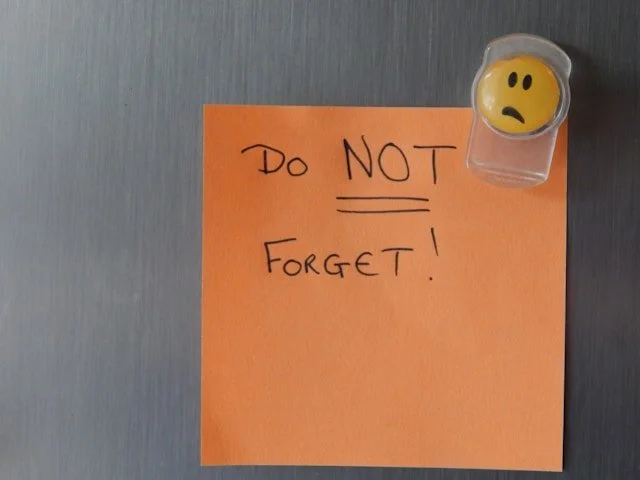
A Script for Repair: Cut This Out and Use It
When you experience a rupture, use this script to guide you through the repair process. For example, imagine a situation where one partner forgets to follow through on a promise, like picking up groceries after work. The other partner feels frustrated and unimportant. Instead of escalating into blame and defensiveness, this script can help you calmly and compassionately navigate back to connection. Each step is paired with a specific phrase to help you reconnect:
1. Take a Pause To Get Calm and Centered
Goal: Regulate yourself so you approach the repair with openness and curiosity. Phrase: “I need a moment to calm down so I can really listen to you. I care about this.”
2. Approach with Compassion
Goal: Show a genuine desire to understand your partner’s experience. Phrase: “I want to hear what this feels like for you. Can you tell me more?”
3. Acknowledge Their Feelings
Goal: Validate their emotions and take responsibility for your part. Phrase: “I see how my actions impacted you. I see you are feeling [make guesses at their feelings]. Did I get that right? I’m truly sorry for [specific impact].”
4. Stay Longer in the Feelings
Goal: Sit with their pain without rushing to fix or defend. Phrase: “I’m here, and I want to understand. Take your time.”
5. Ask: How Can I Make This Right?
Goal: Collaborate on a solution to restore trust and connection. Phrase: “What can I do to make this right for you? Is there more you need to feel okay about this?”
Using these steps consistently can strengthen your bond and build trust, even in moments of misattunement.
Rupture and repair are normal. Misattunement doesn’t mean you’ve failed; it means you’re a very normal human. Remember from the beginning, a health relationship is only in an attuned vibe 30% of the time. The whole secret sauce of healthy relating is getting good at vibing and not vibing, vibing and not vibing, vibing and not vibing. Apology then has very little to do with who is right or who is wrong , who is failing or succeeding. It’s about showing up for your partner with an open heart and a willingness to reconnect.
So next time you find yourself in a rupture, take a breath, and remember: you’re not fixing a problem; you’re nurturing your connection.
If apologies don’t seem to work check these out
Why Couples Keep Score
Mapping The Cause of Recurring Fights
Communication No No’s (but hard to do so don’t beat up on yourself)
Internal Family Systems Parts Mapping For Relationships

About the Author: Traci Ruble, LMFT 51082, has been practicing psychotherapy with couples, individuals, and families for over twenty years. She is a California-licensed Marriage and Family Therapist practicing internationally via secure video from Heidelberg, Germany. Her couples work draws largely from the Couples Institute Developmental Model, Gottman's research, Terry Real's Relational Life Therapy, Emotionally Focused Therapy, Internal Family Systems, STAIR, and psychodynamic approaches, with schema therapy for couples as her most recent addition. You can read more about Traci’s training here. Traci works primarily with couples, executives, founders, and diplomats who are looking for depth, rigor, and honesty in their clinical work. She is also the founder of Sidewalk Talk, a global community listening project that has trained over 10,000 volunteers to offer free listening in public spaces across 120 cities and 20 countries. She writes about relationships, repair, and what it actually means to stay curious about the person across from you. Learn more or inquire about working together at traciruble.com.