
Why Does My Marriage Feel So Unequal? Managing Fairness & Scorekeeping
Something new is happening in couples therapy on the topic of fairness in marriage. What once felt proactive and enlivening has turned into obsessive scorekeeping and bullying people into “fairness submission”. Heck, I joined in too. Some trainings in psychology send the message that bullying your partner to be fair is being a “good feminist”. I’m a feminist therapist in the original sense of the word: I care deeply about equality, agency, and mutual respect between partners. But I don’t believe therapy should become a battlefield where one partner is sanctioned to shame or dominate the other, ever. Terry Real calls this “attacking from the one down position”. Equality grows through mutual empathy and shared responsibility, not role reversal or moral superiority.
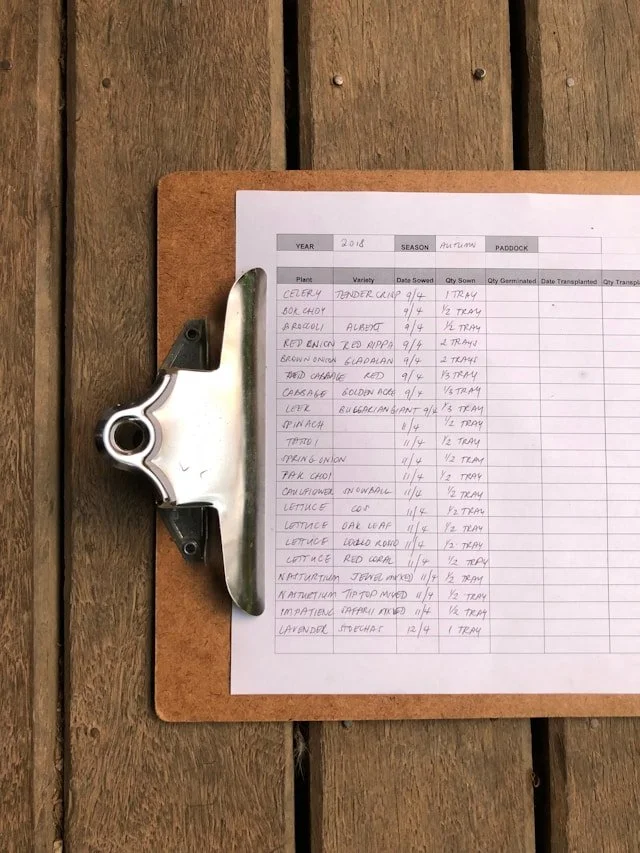
I started to feel uneasy when I saw how “bullying partners to be fair” was trending everywhere, and demanding fairness in your partnership was akin to speaking truth to power. I caught myself thinking, this runs deeper than a fairness and equality issue. What is it? I wanted to know. In my couples therapy room, I saw scorekeeping backfire. Forced fairness never works.
Want to go on a journey with me and get humble and ask, what are the pieces at play here that you may not be seeing?
After all, fairness seems like such a noble goal. Kids learn it on playgrounds, workplaces embed it in policies, and couples invoke it in fights about the unfair mental load women are carrying. Inequality has created lasting, unhealed wounds in our culture; I have zero desire to be cavalier about that. But why are we so hooked on the idea that everything should be split evenly in partners? Just pause for a second because asking that question might stir some stuff in your body. Or make you feel a way. The first time I started poking at this, I felt like I was betraying my community, which fights for fairness. Please, hang in there. I am not going to deny systemic injustice, or anything cockamamie like that.
There is something philosophical and psychological going on that we get myopic, and I want to talk about it because it is really harming marriages under the guise of fighting for justice in the home. I want us to grow wiser and deeper - not just dutifully following some social media script for human behavior. I hope you read this, chew on it for a good long while, see what sits with you and what doesn't, and trust yourself. I decided to compare three perspectives that are unusually different: psychodynamic theory, Nora Bateson’s systems thinking and her warm data concepts, and the provocative insights of Adam Phillips. I worked on this piece for a month and had to ask myself a lot of questions. So maybe you will have your noggin twisted a wee bit, and I really do think this could help your marriage. If it isn’t, toss it out.
The Psychodynamic Lens: Fairness as a Defense Against Shame
What is psychodynamics first of all? It is the branch of psychology that explores how unconscious drives, early childhood experiences, and internal conflicts shape our adult behavior. It assumes we repeat old patterns until they are made conscious. Neuroscience is now proving many of these ideas. Neuroscientists now agree that we see the world through history-colored glasses—or at least that 50-80% of how we experience the world is shaped by our history, says Juliane Taylor Shore. That means that how we experience fairness or what feels unequal today is shaped by how we experienced it in the past.
It makes sense if you think about it with fairness too. As kids, we were exquisitely attuned to whether siblings or classmates got more love, attention, or cookies. If you felt overlooked or deprived, the sting often lodged itself deep in your memory banks —your brain and limbic system —and primed you to see the world as the same depriving force that could hurt you again.
As adults, getting fixated on fairness becomes a way to have some control today over something you didn’t have control over then; “See? I am not being cheated this time.” I want to pause here and say I am not advocating for “door mattery” or rolling over and taking being treated unjustly. The mental load for women is really real. Even for couples who start out with the intent to share the load, society ends up pushing women back into the role of house manager. That is an intimacy-building convo for couples to have, not a battle to ignite. I am advocating for something a wee bit different than redividing labor when rigid scorekeeping fights erupt and instead find the ouch the scorekeeping is protecting. Rigidity around fairness harms human relationships. Rigidity is always a signpost for me as your therapist to “look for the ouch that is being protected”.

Your fixation on fairness may actually be something your unconscious is trying to do for you to help you manage the pain of earlier experiences when you were treated unfairly or not chosen. Fairness fixation is protecting you from never having to feel not good enough or less than, but it tends to vigilantly predict it. Those early hurts were too much for a child to bear, so you wisely developed ways to cope that are now wired into your body and mind, often outside awareness, and maybe not so needed.
Family dynamics can shape these defensive patterns, but they’re also influenced by systemic forces—racial, gendered, or class-based marginalization. Some of us grew up in a world where opportunity, safety, or resources were unfairly distributed. In that case, your current obsession with fairness in marriage might be a remembered protest against being erased or shortchanged again.
Working with the harms of past injustice doesn’t mean a hall pass for bullying your partner into change. It means getting to the original ouch as it lives inside you first, and then bringing that to your partner so you can hold the pain together. I’ve never seen anything motivate a partner more than witnessing that their behavior causes genuine pain, rather than being finger-wagged into submission.
“I do not believe in throwing out fairness conversations. I believe in changing the way the conversations happen to include a lot less scorekeeping and a lot more complex and context dependent conversations. ”
The Batesonian Lens: Fairness as a Reduction of Complexity

What is warm data? I am a little obsessed with Nora Bateson right now and I haven’t even trained with her. A bow to those of you who have followed her work for a good long while. She is the only person who has captured why Sidewalk Talk was so much more than mental health treatment or bridging divides, but was really me entering the field of warm data. Or as I like to say, the ecosystem of life. Nora Bateson coined the phrase warm data to describe information that carries context: the relational, cultural, and systemic textures of life. Unlike “cold data,” which is quantifiable and detached, warm data reflects the living, interdependent systems we are part of.
Through her warm data lens, fairness is a cultural shortcut. It is a way of flattening life’s messiness into neat columns. Living systems, like marriages, are full of interdependencies, histories, and contexts. They do not balance perfectly. But our culture, obsessed with metrics, neatly organized data in rows and columns, and measurement, wants clean lines. So, fairness is a way to control the complexity of the living ecosystem. Why? I think, for the same reasons we describe from the psychodynamic lens, to manage unbearable feelings. But I think here, it less about unbearable feelings of hurts from the past but the unbearable feeling that comes up with really complex connections to many things at once. We have to bear that we simply do not have control of it all and we humans sure struggle to feel that truth. If we reduce things down to a scorecard or "my turn, now your turn" it feels way safer than trusting the shifting ecosystem of life.
When we cling to fairness, we reduce the warm, relational data of our lives. The subtle ways care flows, unevenly but meaningfully, gets lost in simplistic tallies. And my personal thought to add to Nora's is: who decides what is fair and what is not? It is sure easy and sneaky for misuse of power to creep in right there where we think we are creating fairness. This ah-hah, I have been sitting with, for what it means in terms of how we behave. I do not believe in throwing fairness conversations out. I believe in changing the way the conversations happen to include a lot less scorekeeping and a lot more complex and context-dependent conversations. We lose sight of the richness. Things like marginalization, neurodivergence, childhood wounds, skills, confidence and so much more are wrapped up in this fairness conversation.
The Adam Phillips Lens: Fairness as a Defense Against Desire
Who is Adam Phillips? A British psychoanalyst and essayist, Phillips is known for his paradoxical style. It usually takes me an hour to read six pages of his work because it is dense and mind-bending. He blends Freud and Winnicott with literature, philosophy, and a healthy suspicion of cultural norms. His writing is less about offering solutions and more about unsettling our certainties. A special thanks to Sadaf Vidha and my own analyst for talking with me a lot about Adam Phillips.

Here is the big juicy ah hah that I got from some of Phillips’ thinking. He reminds us that the things that have been most meaningful to us in our lives are usually not where fairness presides. Love, generosity, and pleasure are dangerously unfair playgrounds. Desire, in particular, refuses to split evenly. One partner may want more closeness, the other more space. Desire stays really electric and alive in a couple if they don't impose fairness or evenness on one another's desires but keep it playful in the unevenness.
Our obsession with fairness can be a way of protecting ourselves from just how vulnerable and risky human desire is. I mean, as soon as you let the cat out of the bag and say "I desire this," you have opened yourself to potential loss. Desire is uncontrollable. I cannot force my partner to desire x, y, and z the way I do. It arises and fades on its own schedule. Desire is a scary feeling, to be honest, because it makes us dependent on the thing we desire. To admit desire is to reveal a vulnerable need for the other. And it is destabilizing. Too much or too little desire can shake the delicate order of a relationship. So what is the lesson here?
When a couple is obsessed with fairness, what may actually be going on is that the vulnerability of sharing desire has actually gone underground. Fairness offers the fantasy of safety from desires going unmet or rejected altogether if expressed. We feel we are in control when we start making those spreadsheets of fairness, and that control feels a hell of a lot safer than the messiness of the unrequited desire for mattering, for love, for care, etc. Here is the biggest take-home, ready? When a couple is rigid about achieving safety through fairness, they sometimes end up starving intimacy itself. For couples, the invitation is not to make everything equal, but to dare to let generosity, longing, and even asymmetry live between you. It takes a lot of emotional chops to do this. We need the emotional capacity to bear our dependency, our letdowns, but right now we also need to bear the betrayal of a culture that says "scorekeeping is the right way to relate to one another". Rather than asking, “Is this fair?” try asking, “Where do I want you, and where do you want me?” That shift from measurement to desire can be unsettling and also exactly what breathes life back into a marriage.
In my therapy office, I see how fairness fights often play out along gendered lines. The exhausted woman who carries the invisible labor can slide into attack. The man who feels criticized can slip into defense. These loops are not just personal quirks but echoes of cultural scripts about whose work counts. And yes, I see similar patterns in queer couples too. Sometimes one partner inherits the “over-functioning caretaker” script while the other inherits the “don’t criticize me” script, regardless of gender. A Nora Bateson–style inquiry helps here: What larger story is this fight part of? What cultural expectations are sitting at our table right now? How can we notice the ledger pattern without reducing each other to it? And then add in some Adam Phillips into the mix. What do I most desire here with you? Where am I shutting down my desire? Where am I shutting down your desire? Naming the context softens blame and opens curiosity and bringing in desire brings in depth and aliveness. I have written another article on scorekeeping here that talks further about some of this if you want to read it here.
“We need the emotional capacity to bear our dependency, our letdowns, but right now we also need to bear the betrayal of a culture that says “scorekeeping is the right way to relate to one another.””
So Why the Obsession About Fairness?
Psychodynamically, Fairness and scorekeeping that gets rigid and obsessive are about controlling the relating so one doesn't feel less than or not enough ever again.
Batesonian: From Nora Bateson’s view, fairness is our attempt to tame messy, living complexity by shrinking it into something that looks measurable and safe, but when we do, we erase the richer context of warm data that allows us to stay with the interdependencies of our lives.
Phillips: For Adam Phillips, fairness like this protects us from inhabiting our desire fully and feeling how scary it is to be out there on the edge with it not knowing if it will be returned.
Fairness matters. But when it becomes the whole story, we lose connection to something more essential: generosity, recognition, and the mystery of living systems. For couples, this means the real work is not tallying but turning toward each other with a grand kind of holy curiosity. You can practice this in small ways. Give something without expecting a return. Name a moment of invisible care you saw your partner do. Ask, “Where do I long for you most right now? Where do you long for me?” These simple practices shift the focus from numbers in a spreadsheet to connection. They make intimacy less about scorecards and more about the energy and flow of love and desire. It is scary and hard but I have found most things in life that are so worth having a bit scary and hard, don't you?
Reflection Prompts for Couples
When I keep score, what fear or wound might I be protecting myself from?
Where in our relationship do I notice invisible forms of care that my partner and I offer one another that would not show up neatly in a spreadsheet?
What would happen if I gave something freely this week without expecting anything in return, but experienced unbridled generosity?
Where do I long for you most right now? Where do you long for me?
How can we make space for generosity and unevenness without losing sight of mutual respect?
These questions are not about perfect fairness. They are about creating a deeper conversation, one where intimacy takes precedence over the ledger.